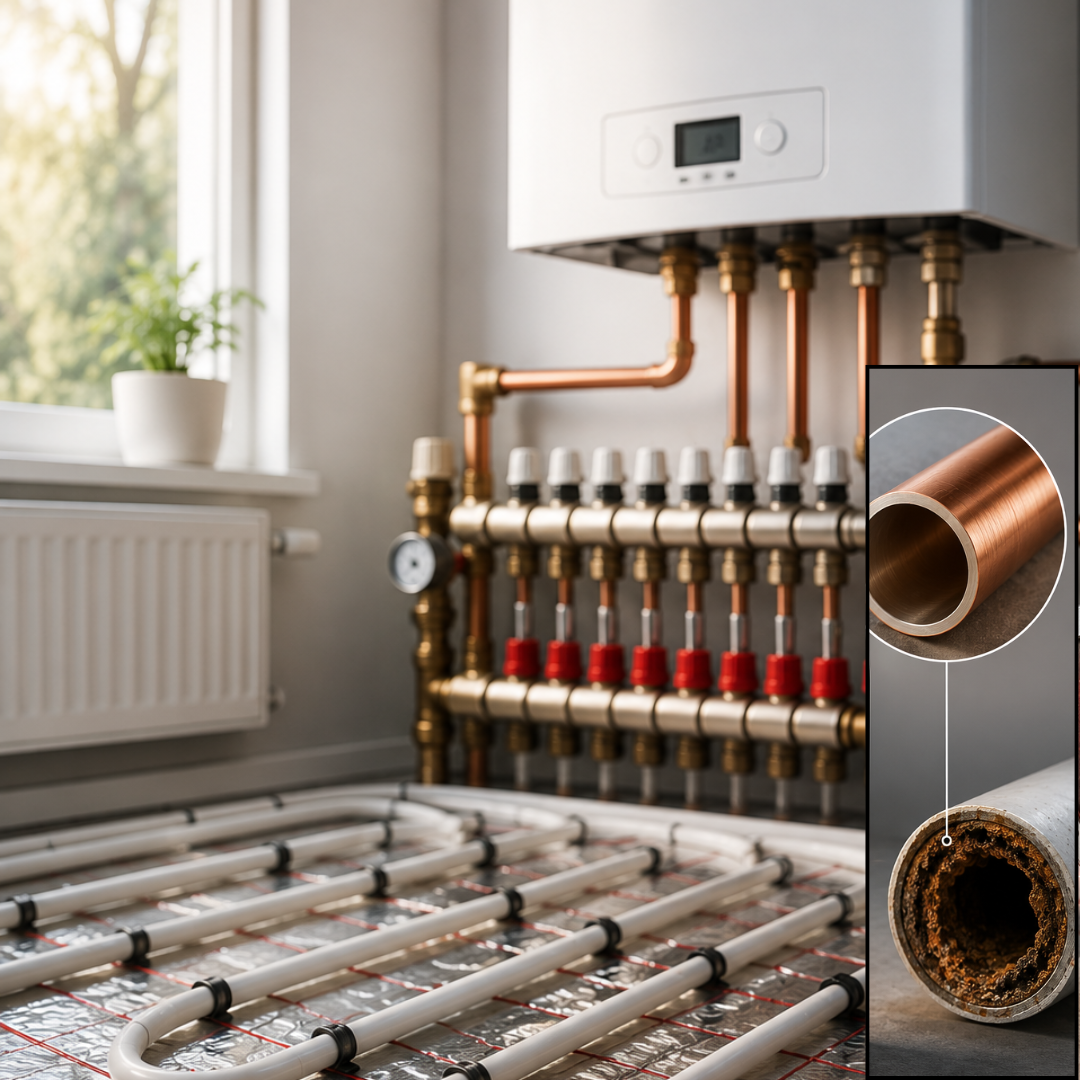
When it comes to central heating systems, many homeowners assume that once everything is installed and running, there is little need for ongoing attention. However, this belief can lead to reduced efficiency, costly repairs, and even premature system failure.
Let's separate fact from fiction by exploring some of the most common myths surrounding heating system protection.
Myth 1: If inhibitor was added years ago, the system is still protected.
Fact: Protection levels should be checked periodically.
Heating system inhibitors play an important role in preventing corrosion, limescale formation, and sludge build-up. However, inhibitor concentrations can change over time due to system maintenance, leaks, water top-ups, or component replacements.
Simply assuming that inhibitor levels remain adequate years after treatment can leave the system vulnerable to damage. Regular testing helps ensure that protection remains effective and allows any issues to be identified before they become costly problems.
Myth 2: Clear water means the system is healthy.
Fact: Many problems cannot be seen with the naked eye.
System water may appear clean while corrosion is actively occurring inside pipes, radiators, or heat exchangers. Chemical imbalances, depleted inhibitors, and early-stage corrosion often show no visible warning signs.
Water testing provides a far more accurate picture of system health than visual inspection alone.
Myth 3: New heating systems don't need protection.
Fact: Protection should begin from day one.
Even newly installed systems can develop corrosion if left untreated. Modern heating systems contain a variety of metals, and without appropriate protection, chemical reactions can occur that gradually damage components.
Adding the correct inhibitor and verifying protection levels helps maintain efficiency and supports the long-term reliability of the installation.
Myth 4: Topping up the system with water is harmless.
Fact: Frequent top-ups can dilute protection levels.
Every time fresh water enters a heating system, it introduces oxygen and minerals that can contribute to corrosion and scale formation. In addition, repeated top-ups may dilute inhibitor concentrations below recommended levels.
If a system requires frequent refilling, the underlying cause should be investigated, and inhibitor levels should be checked afterwards.
Myth 5: Heating system cleaning is only necessary when problems occur.
Fact: Preventative maintenance is usually more effective.
Waiting until radiators develop cold spots or the boiler becomes noisy often means sludge and debris have already accumulated within the system.
Routine maintenance, including cleaning and protection checks, can help maintain efficiency, reduce energy consumption, and extend the lifespan of key components.
The Importance of Regular Testing
A well-maintained heating system is not simply one that works today; it is one that continues to operate efficiently year after year. Regular testing helps confirm that protective treatments remain effective and provides confidence that the system is receiving the protection it needs.
Simple tools such as molybdate test strips can provide a quick indication of inhibitor levels, helping installers and homeowners monitor system protection without the need for complex laboratory analysis.
As summer provides the perfect opportunity for heating system maintenance, now is an ideal time to review protection levels, carry out preventative checks, and ensure your system is ready for the colder months ahead. After all, preventing problems is usually far easier - and less expensive - than fixing them later.