As energy costs continue to rise, many homeowners are looking for ways to reduce their bills without sacrificing comfort. One of the most effective yet often overlooked strategies is improving the efficiency of your central heating system. Surprisingly, small steps such as regular cleaning, protection, and maintenance can make a significant difference in how your system performs – and how much you pay to keep your home warm.
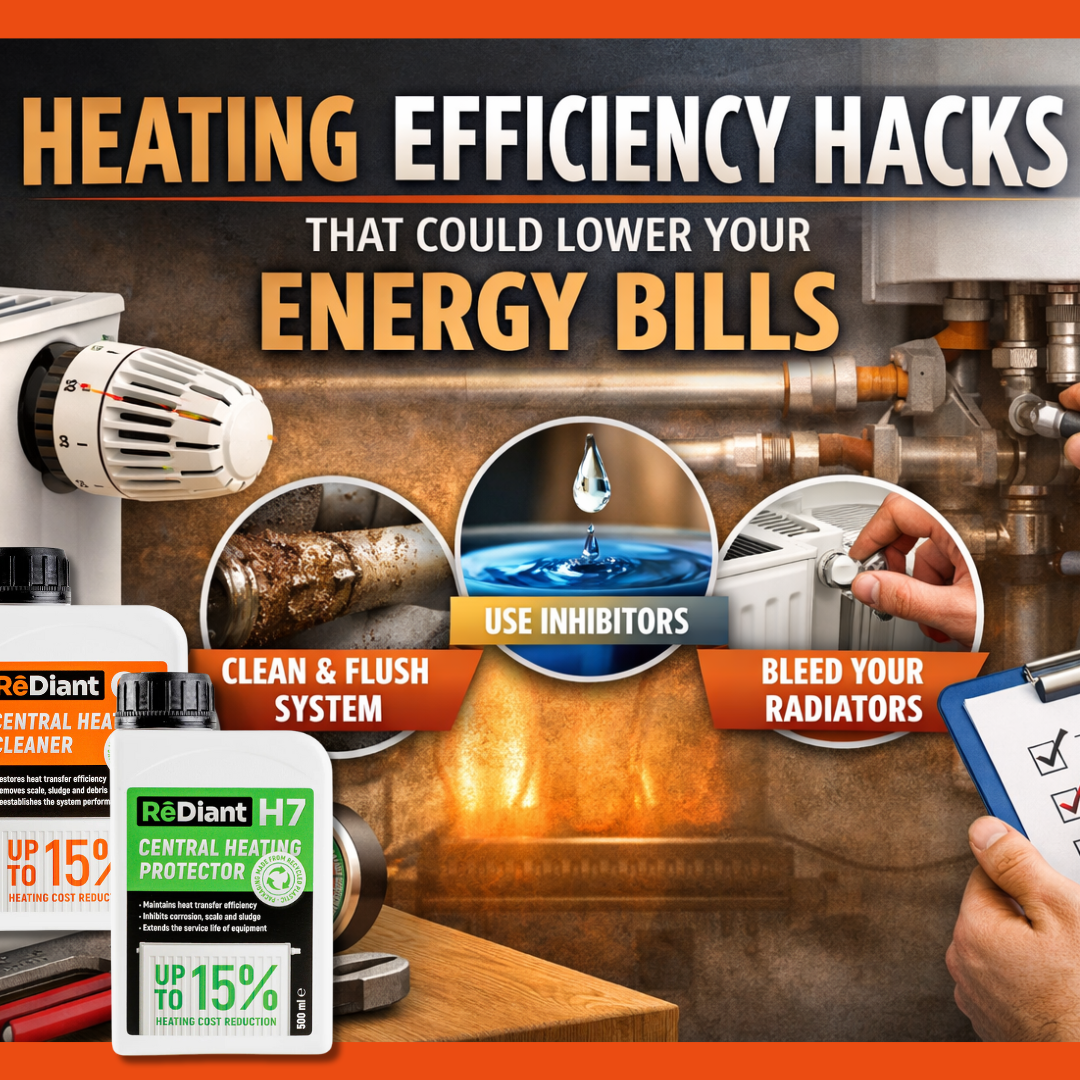
1. Keep your radiators and pipes clean
Over time, central heating systems can accumulate sludge, rust, and debris inside pipes and radiators. This build-up restricts water flow, forcing your boiler to work harder to heat your home. The result is higher energy consumption and uneven heating, with some rooms warmer than others.
A simple solution is to have your radiators flushed periodically. Power flushing or using chemical cleaners designed for central heating systems can remove deposits effectively. Not only does this restore full efficiency, but it also prolongs the life of your boiler and radiators, saving on potential repair costs in the long run.
2. Protect your system from corrosion
Once your system is clean, protecting it from future damage is essential. Corrosion inhibitors slow down the formation of rust and scale, which can otherwise reduce heat transfer and strain your boiler. By keeping the internal components in good condition, inhibitors help maintain consistent heating and reduce the likelihood of costly breakdowns.
Using a high-quality inhibitor is a simple preventative measure that ensures your heating system runs smoothly throughout the year. This small investment can deliver noticeable energy savings and reduce the need for emergency repairs.
3. Bleed your radiators regularly
Air trapped inside radiators is a common cause of inefficiency. Even a small amount of air can prevent water from circulating properly, leaving cold spots in your home and forcing your boiler to work harder.
Bleeding your radiators a few times a year can resolve this issue. The process is straightforward: use a radiator key to release trapped air until water flows steadily. This simple task can improve heat distribution, lower energy usage, and make your home more comfortable without major expense.
4. Optimise thermostat and boiler settings
Even the most efficient heating system will waste energy if it’s not properly controlled. Check that your thermostat is set to an appropriate temperature – typically around 18–21°C for living spaces. Programmable thermostats can also help by reducing heating when it’s not needed, such as at night or when the house is empty.
Additionally, make sure your boiler is running at the correct pressure and efficiency settings. A professional service can identify if your system is operating below its potential and adjust it for optimal performance.
5. Regular professional maintenance
Finally, scheduling an annual service with a qualified heating engineer ensures your system remains in top condition. They can identify hidden issues, recommend suitable cleaners or inhibitors, and make adjustments that maximise efficiency.
Even simple habits like keeping radiators clean, bleeding trapped air, and protecting your system with inhibitors can lead to noticeable energy savings. With the right approach, your heating system can deliver warmth more efficiently, helping you reduce bills while maintaining a cosy home throughout the colder months.