When the colder months come to an end, most of us simply switch off the heating and forget about it until autumn returns. However, while your radiators may be out of sight and out of mind, what’s happening inside your system after winter is far from inactive.
- In fact, this is one of the most important times to take action.
Sludge build-up: the hidden problem
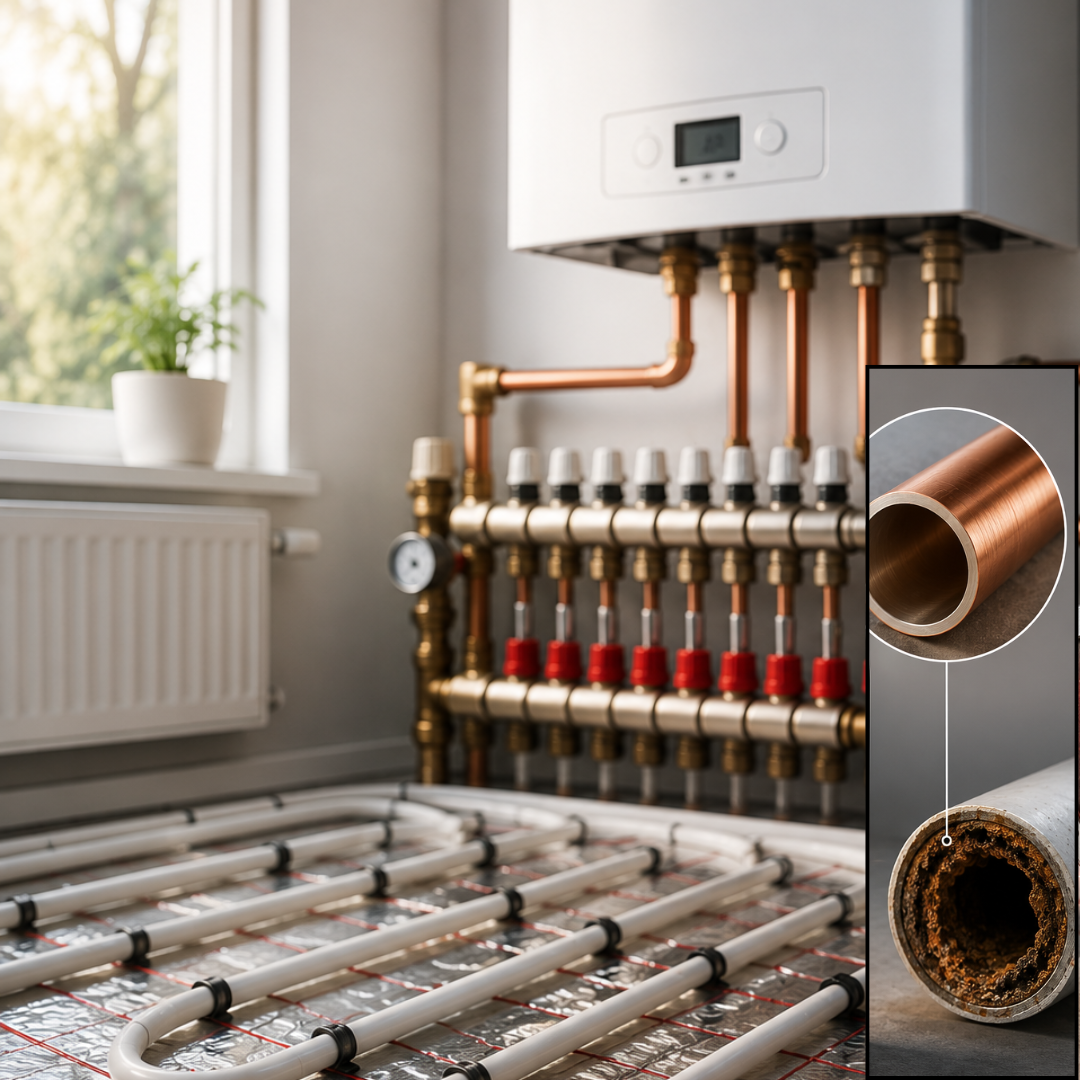
Over the course of winter, your heating system works hard-circulating hot water through pipes and radiators day after day. During this process, tiny particles of rust and debris naturally form inside the system. These particles settle at the bottom of radiators, creating what is known as sludge.
Sludge build-up can lead to:
- Cold spots at the bottom of radiators
- Reduced heat output
- Blocked pipes and poor circulation
If left untreated, it can eventually cause long-term damage to your entire heating system.
Corrosion: damage that continues year-round
Even when your heating is turned off, corrosion doesn’t stop. Oxygen trapped in the system reacts with metal components, slowly breaking them down from the inside.
This internal corrosion:
- Weakens radiators and pipes
- Increases the risk of leaks
- Contributes further to sludge formation
Because this process is gradual and invisible, many homeowners don’t realise there’s a problem until it becomes expensive to fix.
Efficiency loss: higher bills, less heat
A system affected by sludge and corrosion doesn’t operate efficiently. Even if everything seems to be working, your boiler has to work harder to push water through partially blocked radiators and pipes.
The result?
- Higher energy consumption
- Increased heating bills
- Slower warm-up times
In short, you’re paying more for less comfort.
How to fix it: clean and protect
The good news is that these issues are both preventable and manageable-especially if you act in spring.
Step 1: Clean your system
A proper system clean or flush removes accumulated sludge, debris, and contaminants. This restores circulation and improves overall performance.
Step 2: Add a Protector
Once your system is clean, it’s essential to prevent the same problems from returning. This is where a high-quality inhibitor, such as ReDiant® H7 Central Heating Protector, comes in.
It works by forming a protective barrier inside your system, helping to:
- Prevent corrosion
- Stop new sludge from forming
- Maintain long-term efficiency
Adding a protector after cleaning ensures your system stays in good condition throughout the months when it’s not in use.
Why spring is the best time
Spring offers the perfect window for heating system maintenance. There’s no pressure to keep the system running, and you have time to address issues properly before the next heating season begins.
By taking action now, you:
- Avoid autumn breakdowns
- Improve efficiency ahead of winter
- Extend the lifespan of your heating system
- Final Thoughts
Your radiators may look fine from the outside, but inside they could be dealing with sludge, corrosion, and efficiency loss after a long winter.
A simple combination of cleaning and protection can make a significant difference -not just to performance, but to your energy bills and long-term maintenance costs.